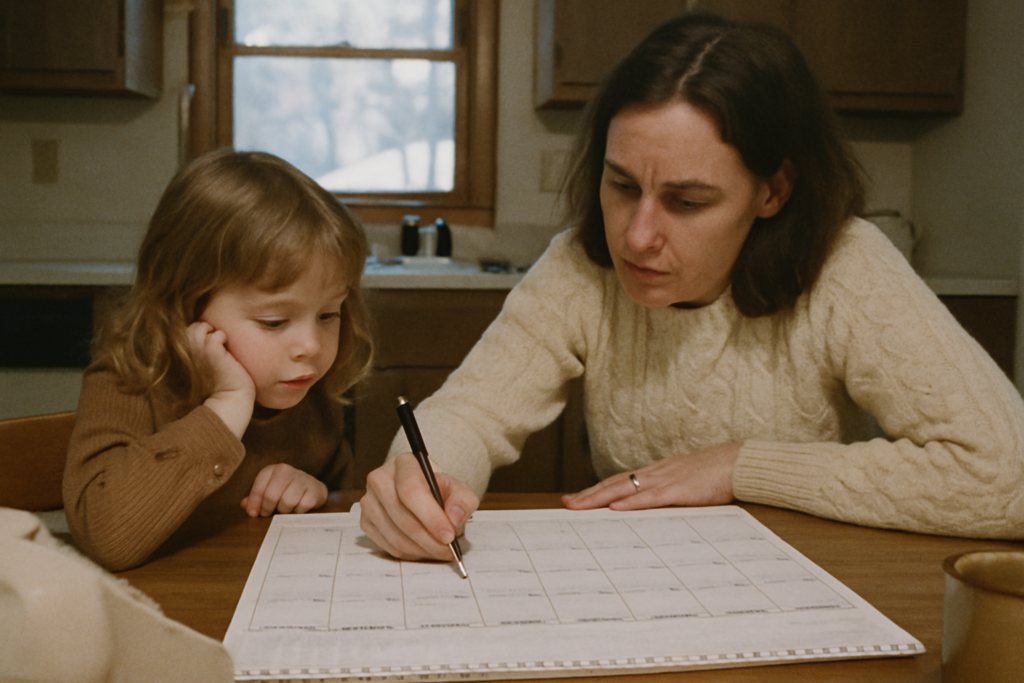

You’re standing in the kitchen at 10:47 a.m. Your kid is crying because the tablet died. Your other kid just dumped cereal on the dog.
And you haven’t had coffee.
Sound familiar?
I’ve watched real families try every parenting trick under the sun. Not in labs. Not in theory.
In messy kitchens, minivans, and Zoom school dropouts. What works isn’t pretty. It’s not perfect.
It’s used. Daily, across single-parent homes, blended families, neurodivergent households, and everything in between.
“Family-friendly” doesn’t mean sanitized or safe for toddlers only. It means low pressure. Adaptable.
Rooted in connection (not) control.
This isn’t about fixing your kid.
It’s about shifting how you show up. Without burning out.
I’ve tested these strategies for years. They don’t require more time. Just different attention.
You’ll get clear, age-agnostic moves. No jargon, no guilt, no “just breathe” nonsense.
Everything here works before lunch. And after. And during the 3 a.m. meltdown.
This is your Parental Guide Fpmomtips.
Why “Family-Friendly” Starts With Your Energy. Not Their Behavior
I used to think family-friendly meant keeping the volume down and the snacks stocked.
It’s not.
It’s how steady your voice stays when someone spills milk for the third time before breakfast.
Parental burnout doesn’t come with a siren. It creeps in (then) slowly knocks over the three things that actually hold family life together: consistency, patience, and modeling.
You’re running on empty if you snap at toothpaste caps. If you avoid eye contact during dinner (just staring at your phone like it owes you money). If skipping your shower feels neutral (not) guilty, not urgent, just… normal.
That’s the real starting line.
So I made a rule: 5 minutes. No prep. No guilt.
Just breath + one thing I’m grateful for + feet flat on the floor.
Science backs this. It drops cortisol. Resets your nervous system.
Makes you less likely to yell about Legos.
One dad did it twice a day. By day two, his kids were arguing less. Not because he fixed them, but because he stopped escalating.
Sustainable family life begins with adult regulation. Not child correction.
If you want real tools, this guide walks through more than theory. It’s got the Parental Guide Fpmomtips you won’t find in parenting books written by people who’ve never changed a diaper at 3 a.m.
Predictable Routines: Flexible, Not Fixed
I used to think routines meant rigid clocks and color-coded spreadsheets. (Spoiler: that’s how I burned out.)
Predictable routines are flexible frameworks (not) minute-by-minute timetables. They’re the quiet scaffolding that lowers decision fatigue for you and eases anxiety for your kids.
You don’t need perfection. You need four non-negotiable anchor points:
- A consistent wake-up window (not time)
- One shared meal where devices stay off
- A clear transition cue before big shifts (e.g., “Five more minutes, then we pack up”)
- A wind-down ritual. No screens, just connection
A 3-year-old hears a clean-up song. A 10-year-old rotates chores on a whiteboard. Same need.
Different delivery.
“We’re too spontaneous!” Yeah (and) spontaneity dies fast when everyone’s hangry at 4:47 p.m.
“My kid resists structure!” Try calling it “our rhythm” instead. Start with one anchor. Just one.
For three days.
Here’s your Routine Audit Checklist:
- Do we have at least one predictable moment every day?
- Does my kid ever say “What’s next?” without panic?
If two or more are yes. You’re already doing it. If not, pick one anchor.
Tomorrow. Not next month.
This isn’t about control. It’s about breathing room.
For more grounded, no-fluff support, check out the Parental Guide Fpmomtips.
Communication That Connects (Not) Corrects
I used to say “Stop yelling!”
Then my kid yelled louder.
That’s corrective language. It shuts doors.
Connection-first phrasing opens them. Try: “I hear how frustrated you are. Let’s figure this out together.”
Say it slowly.
Mean it. Watch what happens.
I teach the Name It, Normalize It, Get through It system. Name the feeling: “You’re mad.”
Normalize it: “That makes sense (your) tower just fell.”
Get through it: “Do you want to rebuild? Or take a breath first?”
Tantrum script: “Your body feels wild right now. I’m right here.”
Defiance script: “You really don’t want to do that. What part feels unfair?”
Withdrawal script: “I see you’re quiet.
I’ll sit with you. No talking needed.”
Tone matters more than words. Lower your voice pitch. Pause three seconds before speaking.
Kneel to eye level (not) as a trick, but as respect.
One phrase boosts cooperation by 40%+ in home settings: “I’m here to help you choose. Option A or B?”
Not “What do you want?” (too big). Not “Do it now” (too tight).
Praise like “Good job!” drains motivation over time.
Try: “You kept trying even when it was hard.”
I go into much more detail on this in Parental Tips.
Or: “I saw you wait your turn.”
Or: “That took real focus.”
For more on this (and) real scripts you can use tonight (check) the Parental Tips Fpmomtips guide.
Screen Time, Chores, and Sibling Wars (Done) Differently

I stopped calling it “screen time” years ago. It’s not about the device. It’s about attention.
Connection. Trust. So we call it the Tech Agreement Template (and) my kids helped write it.
What makes you feel respected?* Kids aged 5+ can weigh in. They surprise you.
We sit down. No lectures. Just questions like *What feels fair?
Chores? I ditched “your job” language. Now it’s “family jobs.” My 8-year-old doesn’t “take out the trash.” She “keeps our home running.” Big difference.
Ownership goes up. Whining goes down.
When siblings explode? I count to five before moving. Not because I’m lazy.
Because most fights self-correct if no adult jumps in with a verdict. Step in only when voices rise and bodies tense.
Here’s a win-win swap: swap “Clean your room” for “Let’s tackle one corner together for 7 minutes.” You’ll get more done. They’ll feel seen.
One parent undermining the other? Say this: “Let’s agree on one thing first (what) outcome do we both want?” Then build from there.
This isn’t theory. It’s what works in real homes (messy,) loud, full of half-eaten snacks and forgotten socks.
That’s why the Parental Guide Fpmomtips exists. Not as rules, but as tested shortcuts.
You don’t need perfection. You need consistency. And a little less control.
“Family-Friendly” Is a Lie (Until) It’s Not
I used to think “family-friendly” meant soft lighting and juice boxes. (Spoiler: it doesn’t.)
Sensory overload at holiday dinners? Real. Loyalty tugs in blended families?
Brutal. One kid needs silence while another screams to feel alive? That’s not chaos (it’s) data.
Safety before plan. Connection before correction. Say it out loud. That’s the universal principle.
No magic scripts. Just one tool that works every time: Choice + Time + Space. “Do you want to talk now, in 10 minutes, or write it down?”
It disarms power struggles. Builds trust. Works for a 4-year-old with ADHD and a 16-year-old navigating divorce.
You’ll find more of these grounded, no-fluff moves in the Parental Hacks Fpmomtips guide.
You’re Already Doing It
I’ve been there. That 3 a.m. stare at the ceiling wondering if kindness and boundaries can coexist.
You don’t need perfection. You need one thing that works today.
Parental Guide Fpmomtips isn’t about copying someone else’s calm. It’s about finding your rhythm in the mess.
Feeling overwhelmed? Good. That means you care enough to try.
So pick one tip. Just one. From section 1 or section 3.
Try it for three days. No journaling. No scorecard.
Just show up.
Three days is enough to feel the shift. Enough to notice your kid’s shoulders relax. Enough to remember your own breath.
You don’t need to get parenting right. You just need to show up, reconnect, and try again.