
1. Introduction
Infant nutrition represents one of the most sensitive and highly regulated areas of food production worldwide. During the first months of life, nutrition plays a fundamental role in growth, immune development, metabolic programming, and neurological maturation. While breastfeeding is widely recognized as the preferred method of infant feeding when possible, infant formula serves as a necessary and regulated alternative when breastfeeding is not feasible or chosen.
In recent years, growing international interest in organic formula Europe has reflected broader societal concerns regarding agricultural transparency, ingredient sourcing, and regulatory oversight. Parents increasingly seek information not only about nutrient composition, but also about farming practices, certification systems, and long-term safety considerations.
This article provides a structured analysis of European organic infant formula from a regulatory, agricultural, nutritional, and safety perspective. It aims to explain what defines organic formula within the European Union, how it is regulated, and what differentiates it from conventional alternatives.
2. Regulatory Framework of Infant Formula in the European Union
2.1 Legal Basis and Nutritional Directives
Infant formula marketed within the European Union is regulated under Regulation (EU) 2016/127 and related food law provisions. These legal frameworks define:
- Mandatory nutrient ranges
- Permissible ingredients
- Labeling requirements
- Quality control procedures
Manufacturers must adhere to defined minimum and maximum concentrations for macronutrients and micronutrients. These ranges are designed to ensure that infant formula provides complete nutrition when used as a sole source of nourishment during early infancy.
Unlike general food products, infant formula undergoes specific compositional control due to its role as a primary nutritional substitute.
2.2 Mandatory Nutrient Composition
European regulations specify ranges for:
- Protein quantity and quality
- Total fat content
- Essential fatty acids
- Carbohydrate sources
- Vitamin and mineral fortification
Since 2020, DHA (Docosahexaenoic Acid) has been mandatory in all infant formulas within the EU. This regulatory decision reflects scientific consensus regarding DHA’s role in normal visual and cognitive development.
The European regulatory environment aims to prevent both deficiency and excess, emphasizing nutritional balance rather than marketing differentiation.
3. Definition and Scope of Organic Certification in Europe
3.1 EU Organic Regulation
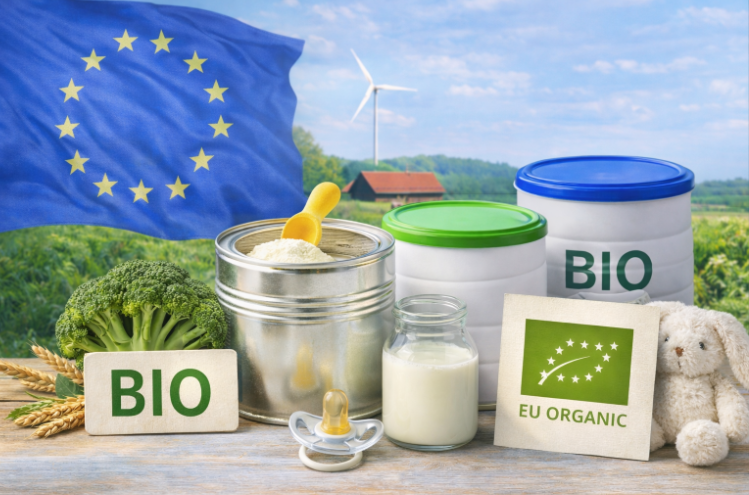
Organic infant formula must comply with EU Organic Regulation standards in addition to general infant formula law. These standards regulate agricultural production methods and processing conditions.
Key principles include:
- Prohibition of genetically modified organisms (GMOs)
- Restriction of synthetic pesticide use
- Regulated veterinary treatment
- Mandatory organic feed for livestock
- Controlled environmental impact
Organic certification applies primarily to agricultural input components such as milk and plant-based ingredients.
3.2 Private Organic Certifications
Beyond baseline EU organic law, some manufacturers adhere to additional private certifications such as:
- Demeter (biodynamic agriculture)
- Bioland
- Naturland
These certification systems impose stricter animal welfare and ecological requirements than minimum EU standards.
4. Agricultural Practices in European Organic Milk Production
4.1 Animal Welfare Standards
European organic dairy farming requires that cows:
- Have access to pasture when conditions permit
- Are fed certified organic feed
- Are not subjected to routine antibiotic treatment
- Are raised without synthetic growth hormones
These standards aim to promote ecological balance and sustainable farming.
4.2 Feed and Environmental Controls
Organic livestock feed must comply with certified organic agriculture guidelines. Synthetic fertilizers and chemical herbicides are restricted, and crop rotation practices are encouraged to maintain soil health.
Such agricultural controls contribute to broader ecosystem sustainability goals within European food production.
5. Ingredient Composition and Nutritional Philosophy
5.1 Carbohydrate Sources
In standard cow’s milk-based European formulas, lactose typically serves as the primary carbohydrate. Lactose mirrors the naturally occurring carbohydrate in human milk.
Some alternative formulations may use adjusted carbohydrate profiles in comfort or specialty formulas.
5.2 Protein Structure and Regulation
Protein content in European formula is carefully regulated. Excessive protein intake in infancy has been linked to later metabolic risk in certain studies, leading to structured upper limits within EU law.
Protein sources include:
- Cow’s milk protein
- Goat’s milk protein
- Hydrolyzed protein (in specialty products)
5.3 Fat Composition
Fat blends in infant formula are designed to approximate the fatty acid distribution required for development. DHA inclusion is mandatory; ARA inclusion varies by formulation but is common.
Vegetable oils are used in regulated proportions to achieve appropriate fatty acid balance.
6. The European Stage System
6.1 Stage 1 (0–6 Months)
Designed as a sole source of nutrition when breastfeeding is not possible. Must meet complete infant nutritional requirements.
6.2 Stage 2 (6+ Months)
Intended for infants who have begun complementary feeding. Nutrient profiles may be slightly adjusted to reflect dietary diversification.
6.3 Stage 3 and Toddler Formulas
These formulas accompany progressive dietary transitions. They are not substitutes for solid food but part of broader nutritional intake.
The stage system reflects regulatory adjustments rather than purely commercial differentiation.
7. Manufacturing and Quality Control
7.1 HACCP and Production Oversight
Manufacturers operate under Hazard Analysis and Critical Control Point (HACCP) systems. This includes:
- Raw material testing
- Microbiological screening
- Nutrient analysis
- Batch traceability
Strict production oversight minimizes contamination risk.
7.2 Labeling Transparency
European law mandates detailed nutritional labeling. Parents can review:
- Exact macronutrient content
- Micronutrient levels
- Ingredient lists
- Certification marks
Transparency supports informed consumer decisions.
8. Safety and Preparation Practices
While manufacturing safety is critical, preparation safety remains equally important.
Parents should:
- Use freshly boiled water
- Follow exact scoop ratios
- Sterilize bottles prior to use
- Cool milk appropriately before feeding
Improper dilution may alter caloric density or nutrient balance.
Healthcare consultation is recommended for infants with medical or digestive conditions.
9. Types of European Organic Formula
9.1 Standard Cow’s Milk Formula
Most common form. Designed for general tolerance.
9.2 Goat Milk Formula
Alternative protein structure; may differ in digestibility for some infants.
9.3 Comfort Formula
Adjusted lactose or protein composition for mild digestive sensitivity.
9.4 Anti-Reflux Formula
Thickened formula designed to reduce regurgitation.
9.5 Hypoallergenic Formula
Extensively hydrolyzed proteins. Requires medical supervision.
10. International Interest and Consumer Trends
Global interest in organic formula Europe reflects:
- Demand for agricultural transparency
- Focus on ingredient minimalism
- Increased access to international information
- Preference for certified organic labeling
Digital communities and online education have contributed to this awareness.
11. Limitations and Considerations
Organic certification addresses agricultural inputs, not medical suitability.
Parents must recognize:
- Every infant’s tolerance differs
- Organic does not eliminate allergy risk
- Medical conditions require professional guidance
- Stage transitions should follow pediatric advice
Balanced decision-making remains essential.
12. Conclusion
European organic infant formula represents a structured intersection of agricultural regulation, nutritional science, and controlled manufacturing processes. The regulatory framework of the European Union ensures defined nutrient composition, mandatory inclusion of specific fatty acids, and transparent labeling requirements.
Organic certification adds an additional layer of agricultural oversight, focusing on pesticide restrictions, livestock welfare, and environmental sustainability.
For families researching organic formula Europe, understanding the legal and scientific foundations of these products allows for informed decision-making. While organic standards provide agricultural assurances, suitability ultimately depends on individual infant needs and professional medical guidance.
Infant nutrition is not merely a product category; it is a foundational element of early life development. Consequently, careful evaluation of regulatory standards, preparation practices, and healthcare recommendations remains essential.